
The family home: FAQ
Short, plain answers about the house during separation and divorce in Alberta. Each one links to more detail.
Last reviewed November 2026 · General information, not legal advice
Getting started
Do we have to decide what happens to the house right away?
No. Unless there is a court order, a deadline in an agreement or a safety concern, you usually have time to get legal advice and understand your options before deciding. Rushing to sell, or refusing to consider selling, can both cost you. A good first step is gathering the facts: the mortgage balance, whose names are on title, and a realistic idea of the home's value.
More: Step 1 of the guide.
Can we sell the house before our divorce is final in Alberta?
Yes. Many couples sell before the divorce is granted, as long as everyone who must sign agrees: every owner on title, plus a married spouse's consent under the Dower Act if the home is only in the other spouse's name. Often the sale proceeds are held in a lawyer's trust account until you have a signed agreement or a court order about dividing them. Talk to your lawyer before listing.
Who gets the house in a divorce in Alberta?
There is no automatic rule that one person keeps the home. Under Alberta's Family Property Act, the value of property gained during the relationship, including the family home, is generally shared, but how it's shared depends on your situation and your agreement or court order. The common outcomes are selling and dividing the proceeds, or one person buying out the other. Your family lawyer can tell you how the law applies to you.
Will my situation be kept confidential?
Yes, through the whole process, not just the first conversation. Your listing never mentions separation or divorce, buyers and other agents aren't told why you're selling, you're contacted only the way you choose, and your documents are shared only with you and the professionals you authorize. If you're selling together, both owners receive the same information.
What does a CDS® Certified Divorce Specialist do?
A CDS® real estate professional helps with the housing side of a separation: understanding options for the home, its value, selling, a buyout and buying again, while working alongside your lawyer and financial professionals. A CDS® does not give legal, tax or financial advice and doesn't decide how property is divided.
More: About Kailey.
Title, consent and who lives there
Does it matter whose name is on title?
It matters for who has to sign, but it doesn't settle who is entitled to the home's value. Everyone on title must sign to sell or transfer it. Even if only one spouse is on title, the other spouse may still have a claim to share in its value under the Family Property Act, and a married spouse has rights under the Dower Act.
What is the Dower Act, and does it affect selling our home?
Alberta's Dower Act protects a married spouse when the family home (the "homestead") is in only the other spouse's name. The owner generally can't sell it, mortgage it or lease it for more than three years without the other spouse's written consent, signed and acknowledged separately before a lawyer or commissioner, unless a court dispenses with consent. Your lawyer handles the paperwork.
More: Who has to sign.
We weren't married. Do the same rules apply?
Partly. Since January 1, 2020, Alberta's Family Property Act also covers adult interdependent partners: generally couples who lived together in an interdependent relationship for at least three years, who have a child together, or who signed an adult interdependent partner agreement. The Dower Act applies to married spouses. Deadlines can be short, so get legal advice early.
More: Alberta: dividing property between unmarried partners.
Can I make my spouse move out of the house?
Not on your own. A court can grant an exclusive possession order that says who may live in the family home for now, considering things like the children's needs and each person's ability to find other housing. That order decides who lives there, not who owns the home. If you feel unsafe, call 911 or the Family Violence Info Line at 310-1818.
Value and money
How do we find out what the house is worth?
Usually with a comparative market analysis (CMA) from a REALTOR®, a professional appraisal, or both. A CMA estimates what the home would likely sell for based on recent sales nearby and is often used to set a list price. An appraisal is a formal valuation by a licensed appraiser, often preferred by lenders and lawyers when one spouse is buying out the other.
More: Appraisal or CMA?
What if we can't agree on the value or the list price?
Common approaches are getting a neutral appraisal you both accept, each getting one and working from the range, or asking the agent to show both of you the same comparable sales at the same time. Agreeing on how you'll decide (for example, accepting the appraised value) before you see the number helps. Your lawyers or a mediator can help if you're stuck.
More: When you disagree on value.
How is the money from the sale divided?
By your separation agreement or a court order, not by your REALTOR®. After the mortgage, any secured debts, real estate commission, legal fees and any mortgage penalty are paid, the remaining proceeds are often held in a lawyer's trust account until you've agreed how to divide them.
Who pays the mortgage while the house is for sale?
That should be agreed in writing, ideally with your lawyers. What matters most is that the payments, property taxes and home insurance stay current: a missed mortgage payment affects everyone on the mortgage, and the lender doesn't care about your separation agreement. Tell your insurer if the home will be vacant.
Is there a land transfer tax if one of us takes over the house?
Alberta has no land transfer tax. When title changes, Land Titles registration fees apply, and refinancing the mortgage can add costs such as legal fees, an appraisal and possibly a penalty for breaking the existing mortgage. Your lawyer and mortgage professional can give you exact numbers.
Will we owe tax when we sell the family home?
Often not, but check with an accountant. In Canada, a gain on a home that was your principal residence for every year you owned it is generally not taxable, and you must still report the sale on your tax return. Rental suites, a second property or years when the home wasn't your principal residence can change that.
Keeping the home
How does a spousal buyout work?
One spouse keeps the home and pays the other for their share of the equity. The usual order is: agree on the value, get legal advice on each person's share, confirm the person keeping the home can qualify for the mortgage alone, then refinance or transfer the mortgage and change title through your lawyers.
Can I afford to keep the house on one income?
Talk to a mortgage professional before you agree to a buyout. To refinance or take over the mortgage alone, you'll usually need to qualify at a higher "stress test" rate, and lenders will count support you pay or receive under a signed agreement. Also budget for property taxes, utilities, insurance, condo fees and repairs on one income.
More: Home equity estimate.
Selling
Do we both have to sign the listing agreement and the offers?
Generally, yes: everyone on title signs the listing agreement, any price changes and the accepted offer, and a married non-owner spouse may need to give Dower consent. Agreeing in advance how decisions will be made (for example, accepting any offer over an agreed amount) makes the sale smoother.
More: Who has to sign.
Can we sell if we're not speaking to each other?
Yes. Many separating couples do. Ask your agent to send the same written updates to both of you at the same time, agree on a communication plan (email only, for example), and copy your lawyers on key decisions. Showings can be scheduled so neither of you has to be home together.
Do buyers have to know we're separating?
No. Your reasons for selling are personal and confidential, and your agent shouldn't share them without your permission. Buyers are told about the property itself, not your circumstances.
What's next
Can I buy a new home before the divorce is final?
Often, yes, but lenders usually want a signed separation agreement first, so they can see your support obligations and what's happening with the existing mortgage. Until you're released from the old mortgage, it may count against you when you qualify. A mortgage professional can tell you when you'll be ready.
More: Buying your next home.
Who should I talk to first?
For your rights and obligations, an Alberta family lawyer. For what you can afford, a mortgage professional. For the home's value and your options to sell or stay, a REALTOR®. If you need low-cost legal help, start with Legal Aid Alberta or the Law Society of Alberta's lawyer directory.
More: Alberta resources.
These answers are general information about real estate in Alberta, not legal, tax or financial advice. Laws and lender rules change, and every situation is different: confirm your options with an Alberta family lawyer and the right financial professional.
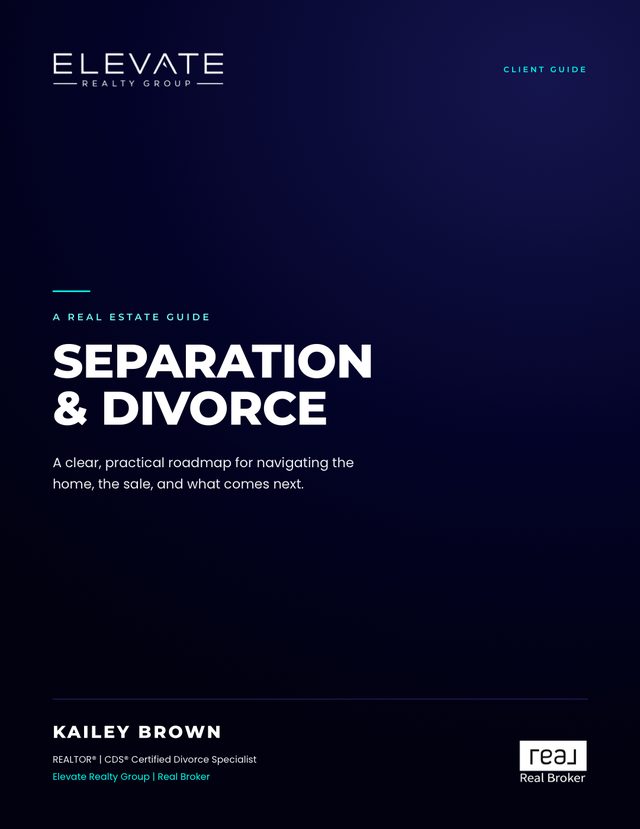
Get the free guide
Separation & Divorce: A Real Estate Guide, 19 pages: the questions to ask first, your options for the home, what happens if you sell, and planning your next place. Download it right away.
“What information do I need before I decide what happens with the house?”
A private, no-pressure conversation about the real-estate side of your separation. You don't need to have anything decided, and everything stays confidential from the first call to closing day.